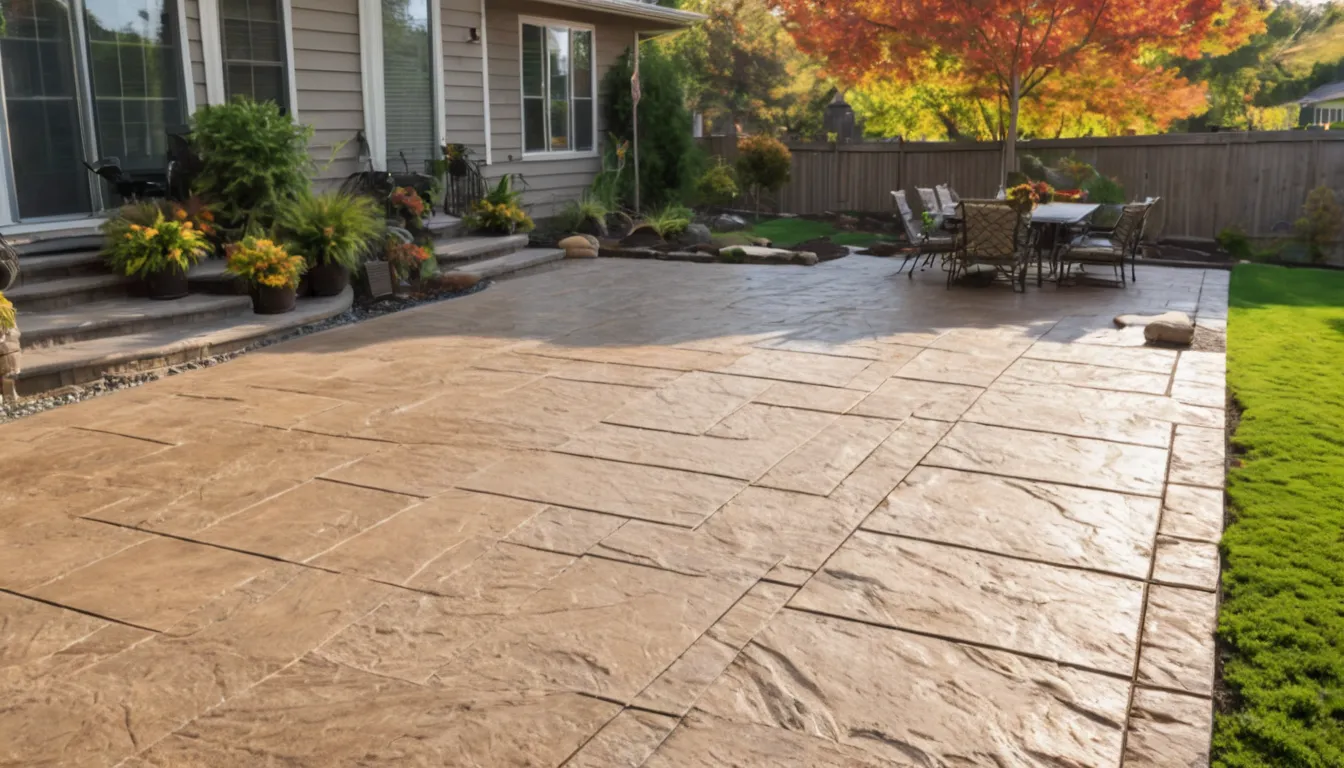
Stamped concrete gives a plain slab the look of stone, brick or wood. It is poured, colored and pressed with a pattern while it is still soft. The result can brighten a patio, walkway or porch without the upkeep of loose stone.
Cleverzk Concrete is a referral service. We do not pour or stamp anything. We connect homeowners in Euclid and the Euclid area with independent local providers who do the work. Then we share easy habits for sealing, drainage and winter care, so your new surface stays handsome through frost, storms and humid summers. We also suggest keeping photos and notes from day one, so every estimate starts with clear records.
Start Here: Plan Before the Pour
Stamped concrete is regular concrete pressed with a pattern while it is soft. It can look like stone, brick or slate. Your first choices are the ones you will live with, so slow down at the start. Protect the pour by planning well.
What You Are Really Buying
Good concrete flatwork has three layers. There is a prepared base, a poured slab and a finished top of color, pattern and sealer. A pretty top means little if the base is weak. Ask a provider how they handle all three.
How the Pattern Gets Made
The provider pours the slab and adds color. Then rubber mats or stamps are pressed in before it hardens. Thin control joints are cut later, so any crack forms in a tidy line. Sealer goes on last.
Colors and Patterns to Consider
Popular looks include ashlar stone, running-bond brick and wood plank. Earth tones hide dust and leaf stains well. Look at a color outdoors in daylight, not only on a small chip. Ask to see photos of finished jobs.
Timing in Frost Country
Cold winters and deep frost shape every outdoor job in our region. Concrete cures well in mild weather. Many providers book up from spring through fall, so ask about openings early. Hot, humid days can dry the top too fast, so a good provider plans the hour of the pour.
Storms and Soggy Ground
Spring flooding and heavy thunderstorms can push a pour back. Wet, soft soil makes a poor base. A careful provider waits for firm ground and covers fresh concrete when rain threatens. A short delay beats a ruined surface.
Where Stamped Concrete Works Well
Patios and Seating Areas
Stamped concrete patios are the most common use. A patterned slab suits bungalows, ranch homes and older frame houses alike. It gives dining sets and grills a smooth, steady spot.
Walkways, Porches and Pool Decks
Stamped work also fits front walks, porch pads and areas around a pool. Ask about a textured finish where feet get wet. A slip-resistant sealer or additive can help.
Stamped Concrete vs. Pavers
Pavers are many small units set on sand. If one sinks, it can be lifted and reset. Stamped concrete is one solid slab. It has fewer joints for weeds and ants, and it sweeps clean fast. But a slab can crack, and a patch may not match the color exactly.
In frost country, both need a well-compacted base and good drainage. Ask each provider why they recommend their choice for your yard.
How Long the Job Takes
Times vary by size and weather. Layout and base work often take a few days. The pour and stamping usually happen in one long day. Many providers ask you to stay off the surface for a few days, then wait longer before heavy furniture. Full strength can take about a month. Your provider will give a schedule.
Keep Photos and Notes
Before any work starts, take wide photos of the yard, the slope and the area near your foundation. Save the written quote. Write down the pattern name, color name and sealer type. Keep photos of the finished job too.
If a storm or flood damages the slab later, these records help. Some policies may cover sudden damage, so check your policy. Providers can often help document damage for a claim.
Caring for the Surface
Seal It on Schedule
Sealer guards color and blocks water. Many providers suggest resealing every two to three years. Ask which product they use and how often it needs a refresh.
Winter Habits
Use a plastic shovel and sand for grip. Many providers advise avoiding rock salt and harsh deicers, especially in the first winter. Made for frost means treating the slab gently when it is cold.
Drainage and Sump Pumps
Point downspouts and sump pump lines away from the slab edge. Water that pools or freezes under concrete can lift it. Keep leaves and mud off the surface in spring.
When Cracks Appear
Hairline cracks along joints are common. Wider cracks, or a slab that tilts toward the house wall, deserve a closer look. For concrete driveway repair or slab fixes, ask a provider. If you also see cracks inside the basement, foundation repair experts handle that separate trade.
Choosing a Provider
Questions Worth Asking
- How will you prepare and compact the base?
- What sealer do you use, and how often should I reapply?
- Where will control joints go?
- What happens if rain is forecast on pour day?
- Can I see photos of past stamped work?
Compare Written Quotes
Get quotes in writing from more than one provider. Check that each lists the area, thickness, pattern, color and sealer. Costs vary by job, so compare details, not just totals.
Your Next Step
Bring your photos and notes, then ask Cleverzk Concrete to connect you with a local provider. Independent providers do the work. Cleverzk Concrete only makes the introduction.
What's Included
Site Review
A provider looks at slope, soil and drainage before suggesting a pattern.
Pattern and Color Choice
Compare stone, brick and plank looks, then pick a color that suits your home.
Base and Pour
Grading, compacting, pouring and pressing the pattern happen in careful order.
Sealing and Care
Sealer protects color, and simple care tips help the slab handle frost.
Typical Stamped Concrete Costs
Prices vary by size, pattern, access and local labor. These typical U.S. ranges are only a starting point. Always get a written quote from the provider before work begins.
| Item | Typical range | Notes |
|---|---|---|
| Stamped slab, per sq ft | $12 – $18 | Includes basic pattern and color |
| Small patio, about 300 sq ft | $3,500 – $7,500 | Depends on pattern and prep |
| Old slab removal, per sq ft | $2 – $6 | Only if a slab is in the way |
| Base grading and compaction | $1 – $4 per sq ft | Wet or sloped soil costs more |
| Initial sealer, per sq ft | $1 – $3 | Often part of the quote |
| Resealing every few years | $300 – $900 | Varies with slab size |
How It Works
Share Your Plans
Tell us the size, the spot and the look you like, and add a few photos.
Meet a Provider
Cleverzk Concrete connects you with an independent local provider who can visit and measure.
Review the Written Quote
Check the base work, pattern, color and sealer before you agree to anything.
Plan the Pour
Pick a weather-friendly date, then follow the provider's curing and care advice.
Why Call Cleverzk Concrete
Plain Local Introductions
Tell us about your project and get matched with independent providers near you.
Clear Records
Simple tips on photos and notes keep estimates tidy and organized.
Frost Wisdom
Care advice is written for cold winters, wet springs and humid summers.
Honest Role
Cleverzk Concrete makes the introduction. Independent providers do all the work.
Other Services
Need stamped concrete help in Euclid?
Tell us about your driveway or patio plans. Send a few photos and notes, or ask for a callback, and a local provider in our network can follow up.
No obligationStamped Concrete Help FAQ
How long does stamped concrete last?
With a solid base and regular sealing, stamped concrete can last many years. Cold winters and poor drainage shorten that. Reseal on schedule and keep water moving away from the slab.
Does stamped concrete crack in cold weather?
Any concrete can crack when frost moves the ground under it. A well-compacted base, control joints and good drainage lower the risk. Hairline cracks are common. Ask your provider how they plan for deep frost and what they would recommend if cracks appear.
Is stamped concrete slippery when wet?
It can be, especially with a glossy sealer. Ask the provider about slip-resistant additives or a matte finish, particularly for pool areas, steps and spots that stay damp after storms.
Get in touch
Tell us about your driveway or patio plans. Send a few photos and notes, or ask for a callback, and a local provider in our network can follow up.
No obligation